
Find the mint mark on your coin
Pick a coin type. The ring shows where the letter sits. Silver and gold coins show what their metal is worth at today’s price, updated November 28, 2026 at 9:42 PM EST.
Cents
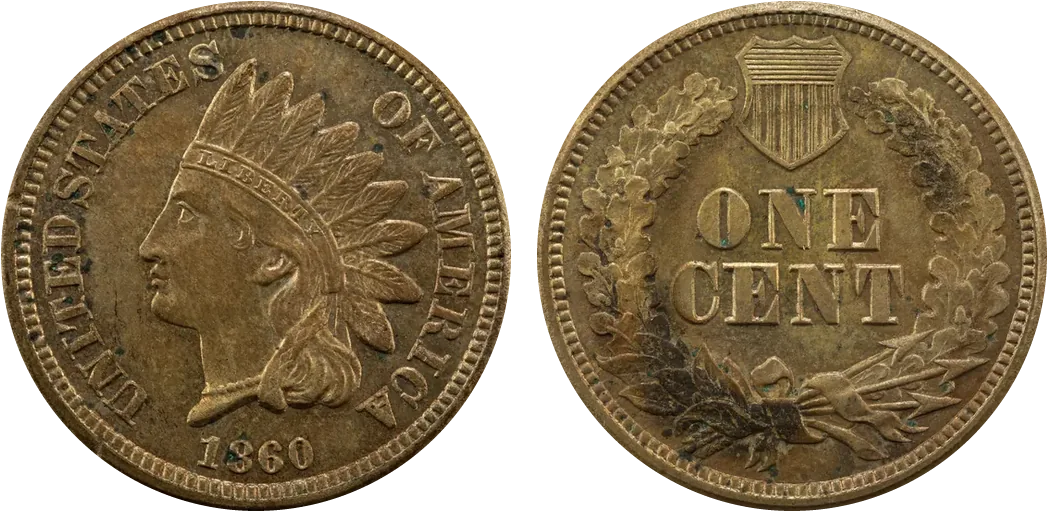
Indian Head cent1859 to 1909
- Where
- Back, under the wreath
- Letters
- S on 1908 and 1909 only
Every other Indian Head cent came from Philadelphia and has no mark.
Indian Head cent values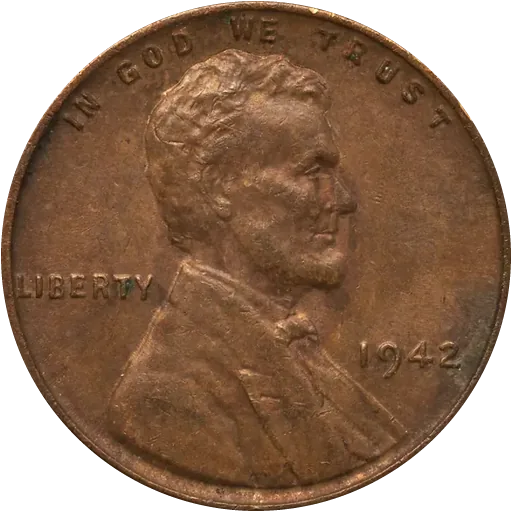
Lincoln wheat cent1909 to 1958
- Where
- Front, under the date
- Letters
- None (Philadelphia), D, S
The 1922 "no D" cent came from Denver with the mark filled in on the die.
Wheat penny values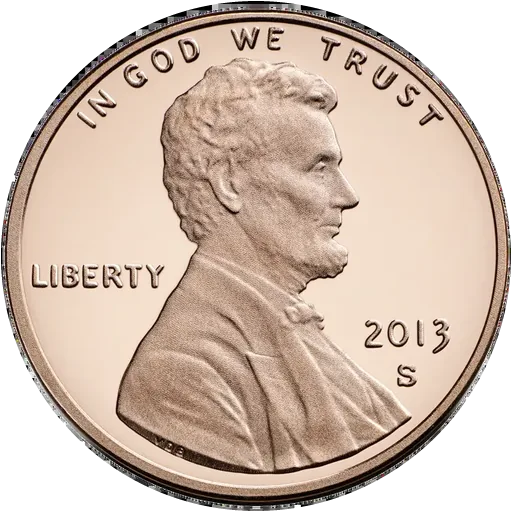
Lincoln cent1959 to 2025
- Where
- Front, under the date
- Letters
- None or P, D, S
P appears only on 2017 cents. No mark at all from 1965 to 1967. S cents are proofs, apart from some 1968 to 1974 circulation strikes.
Lincoln Memorial cent values
Nickels
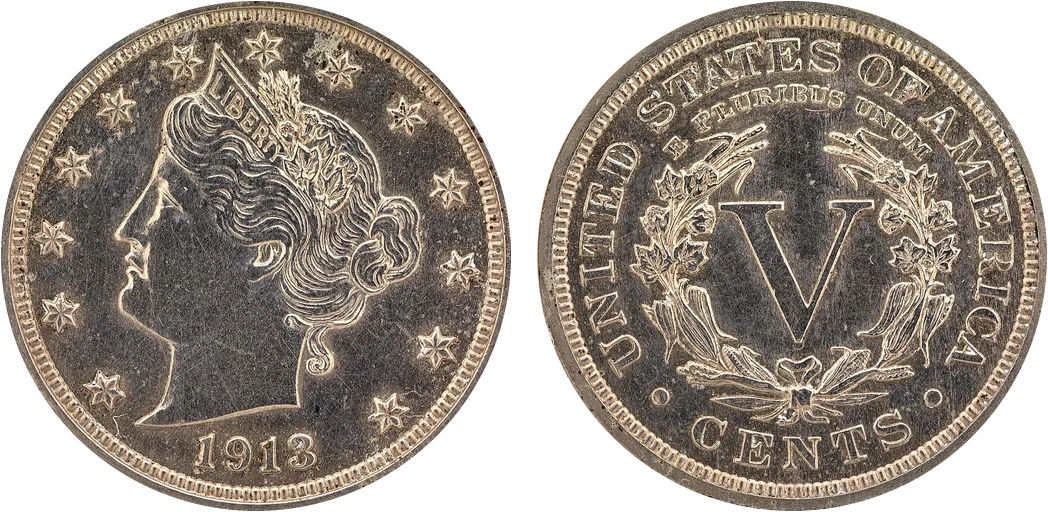
Liberty Head nickel1883 to 1912
- Where
- Back, lower left, under the dot to the left of CENTS
- Letters
- D and S on 1912 only
All earlier dates came from Philadelphia. The famous 1913 has no mark.
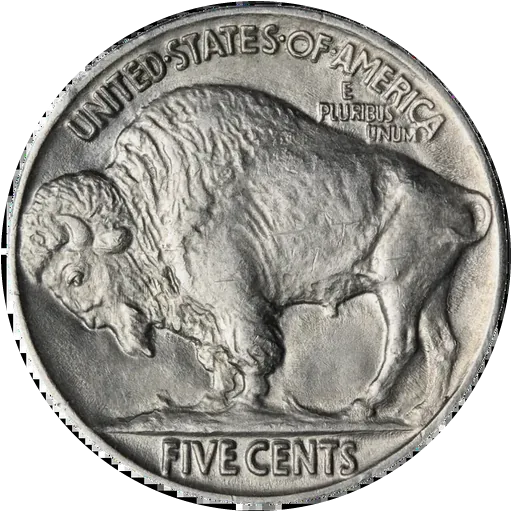
Buffalo nickel1913 to 1938
- Where
- Back, under FIVE CENTS
- Letters
- None, D, S
On worn coins the mark is often the first thing to go.
Buffalo nickel values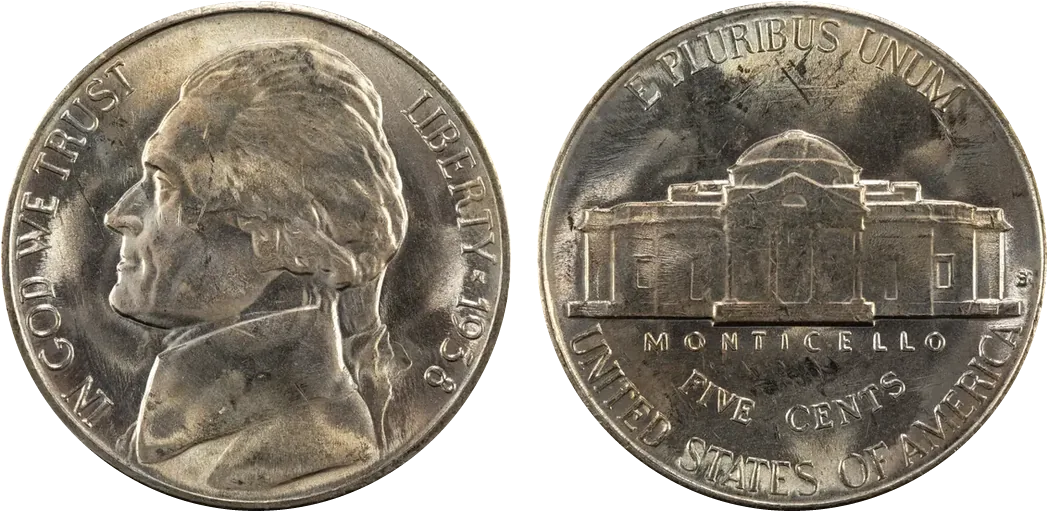
Wartime silver nickel1942 to 1945
- Where
- Back, a large letter above the dome
- Letters
- P, D, S
- Melt
- $2.46 in silver
The first P on any US coin. The big letter flagged the 35% silver alloy. Shown here on a regular reverse.
War nickel melt valueJefferson nickel1968 to today
- Where
- Front, near the date
- Letters
- P (from 1980), D, S
From 1968 to 2004 it sits just past the last digit of the date. On 2005 nickels it sits under LIBERTY, and on the forward-facing portrait since 2006 it sits under the date. S coins are proofs. Shown on a 1938 coin of the older design.
Jefferson nickel values
Dimes
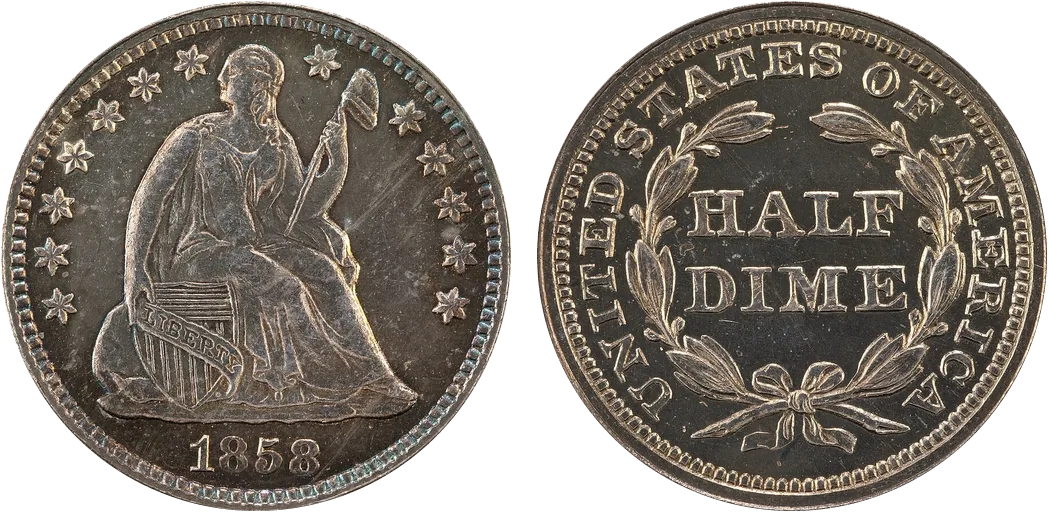
Seated Liberty half dime and dime1837 to 1891
- Where
- Back, under or inside the wreath
- Letters
- None, O, S, CC
Carson City struck dimes only, not half dimes.
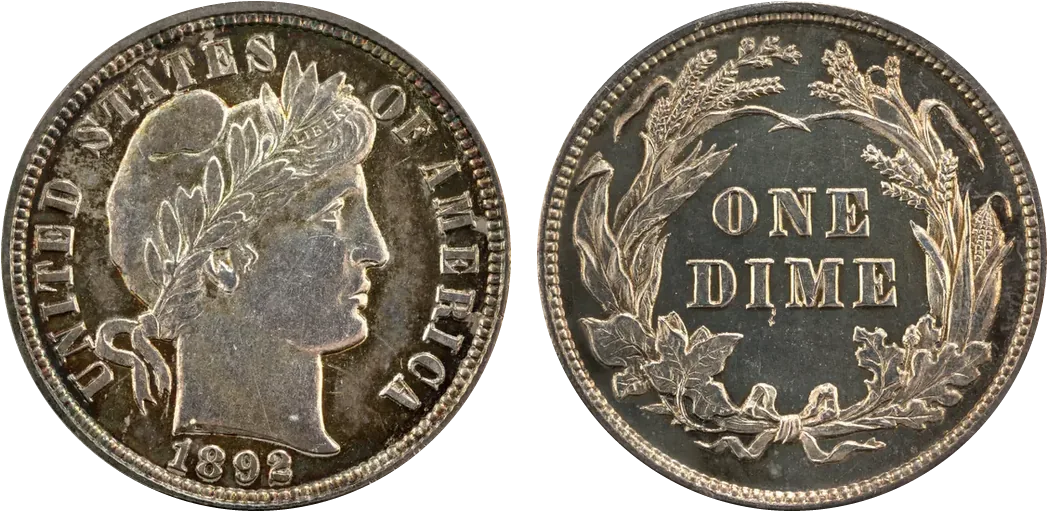
Barber dime1892 to 1916
- Where
- Back, under the wreath
- Letters
- None, O, S, D
- Melt
- $3.16 in silver
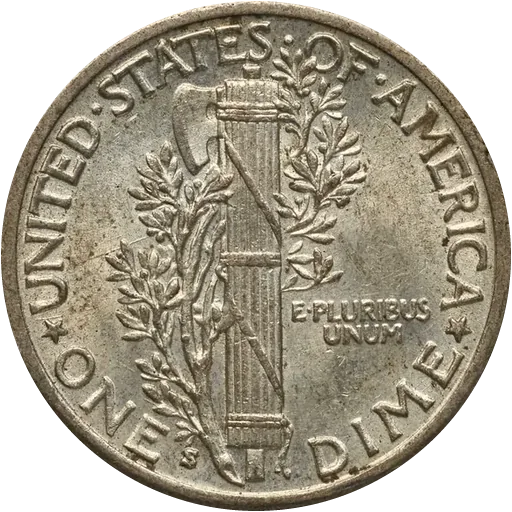
Mercury dime1916 to 1945
- Where
- Back, left of the bundle of rods, just right of the E in ONE
- Letters
- None, D, S
- Melt
- $3.16 in silver
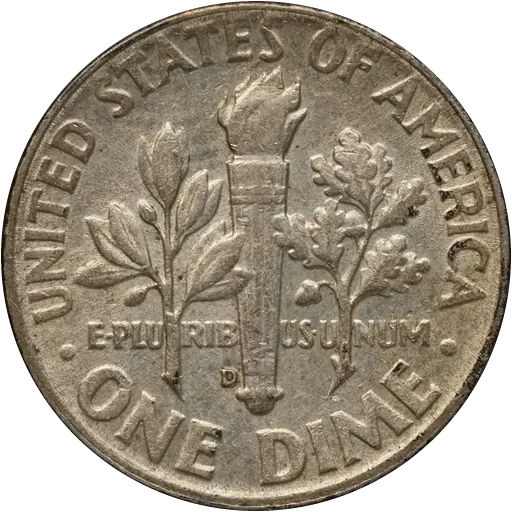
Roosevelt dime1946 to 1964
- Where
- Back, left of the torch base
- Letters
- None, D, S
- Melt
- $3.16 in silver
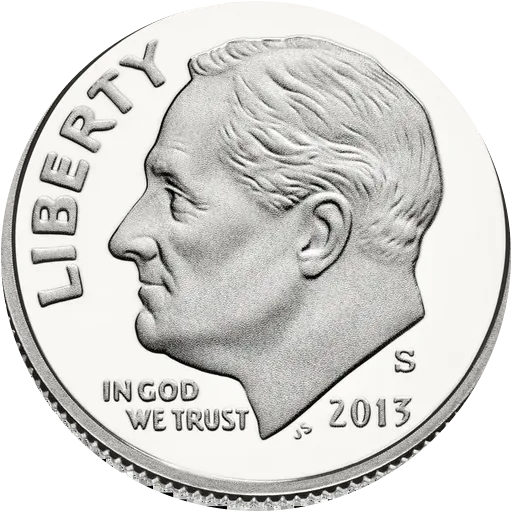
Roosevelt dime1968 to today
- Where
- Front, above the date
- Letters
- P (from 1980), D, S, W
S dimes are proofs. W appears on the 1996 dime made for mint sets.
Roosevelt dime values
Quarters
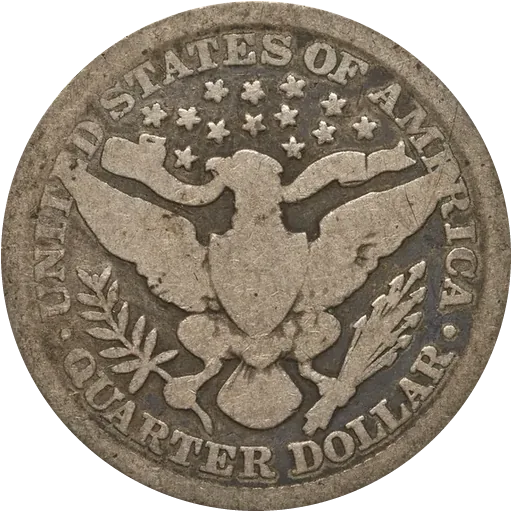
Barber quarter1892 to 1916
- Where
- Back, under the eagle
- Letters
- None, O, S, D
- Melt
- $7.91 in silver
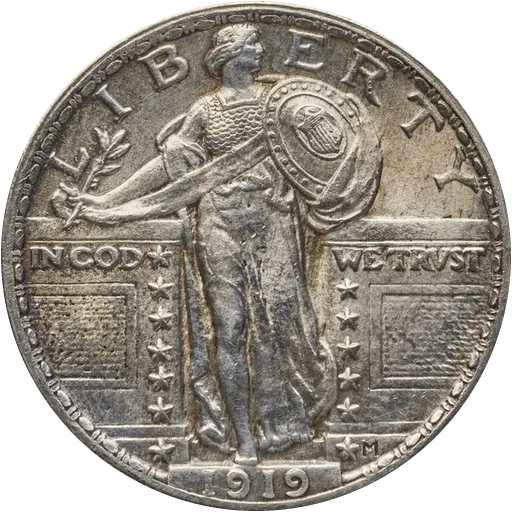
Standing Liberty quarter1916 to 1930
- Where
- Front, at the base of the wall, left of Liberty's foot
- Letters
- None, D, S
- Melt
- $7.91 in silver
The M at lower right is the designer's initial (Hermon MacNeil), not a mint mark.
Standing Liberty quarter values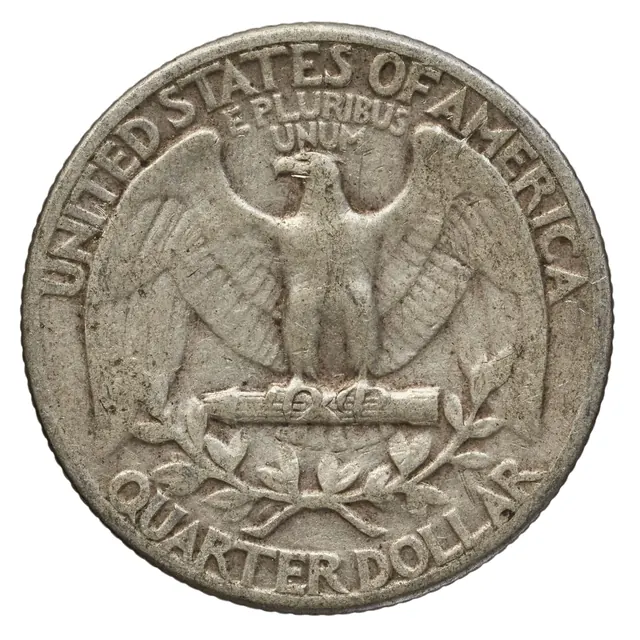
Washington quarter1932 to 1964
- Where
- Back, under the wreath
- Letters
- None, D, S
- Melt
- $7.91 in silver
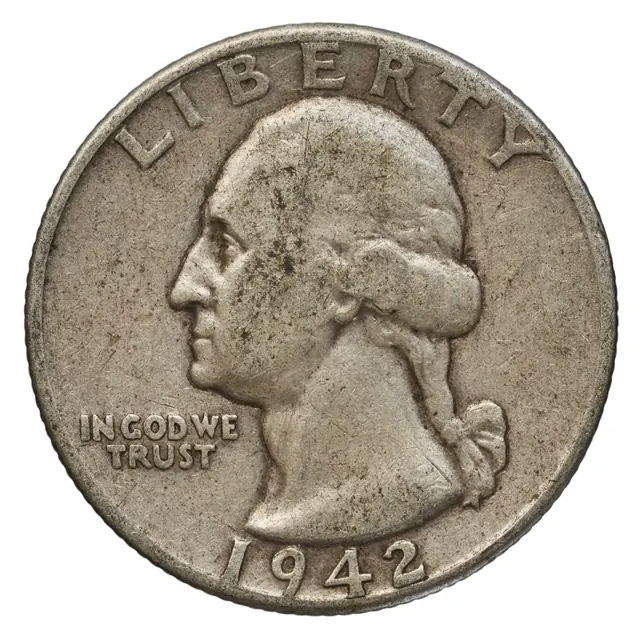
Washington quarter1968 to 2021
- Where
- Front, right of the ponytail and hair ribbon
- Letters
- P (from 1980), D, S, W
W quarters came from West Point in 2019 and 2020. S quarters are proofs and collector coins. Quarters since 2022 show Washington facing right, with the mark still on the front near the date. Shown on a 1942 coin, which had its mark on the back.
Quarters worth money
Half dollars
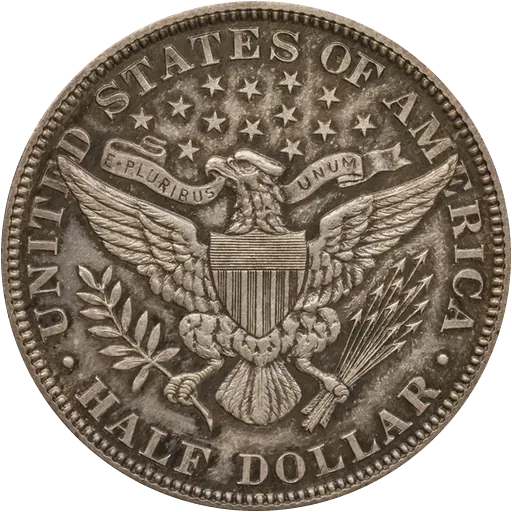
Barber half dollar1892 to 1915
- Where
- Back, under the eagle
- Letters
- None, O, S, D
- Melt
- $15.82 in silver
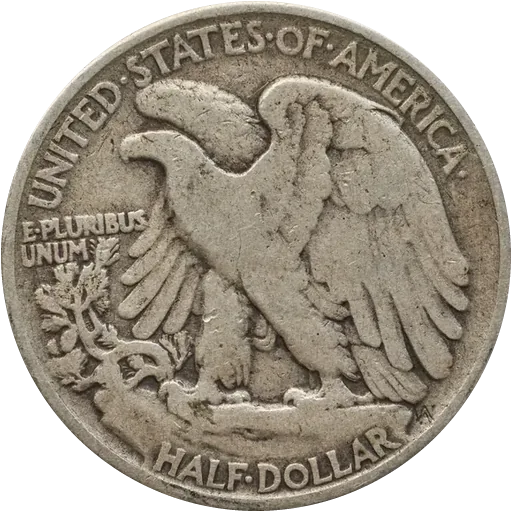
Walking Liberty half dollar1916 to 1947
- Where
- Back, lower left, under the tip of the pine branch
- Letters
- None, D, S
- Melt
- $15.82 in silver
The 1916 and some 1917 coins carry it on the front, under IN GOD WE TRUST. The Mint moved it in February 1917.
Walking Liberty half values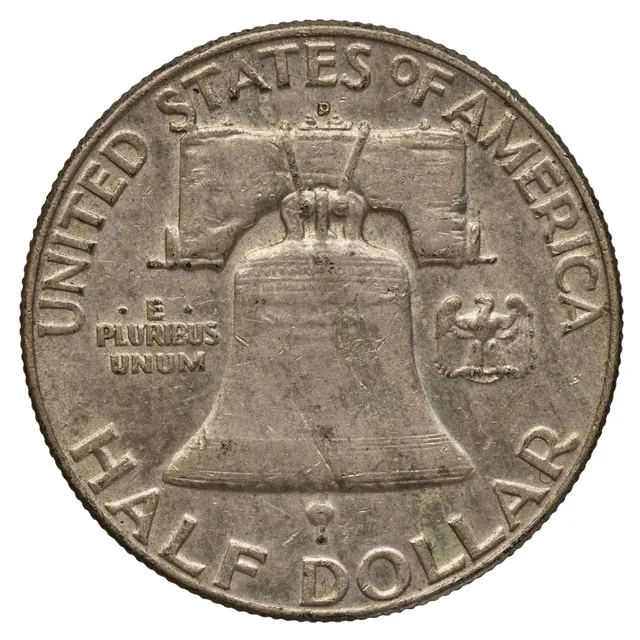
Franklin half dollar1948 to 1963
- Where
- Back, above the Liberty Bell's yoke, under the E in STATES
- Letters
- None, D, S
- Melt
- $15.82 in silver
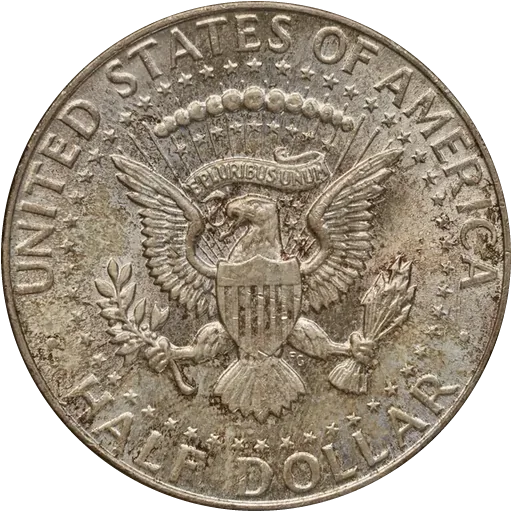
Kennedy half dollar1964
- Where
- Back, in the angle where the eagle's claw grips the olive branch
- Letters
- None, D
- Melt
- $15.82 in silver
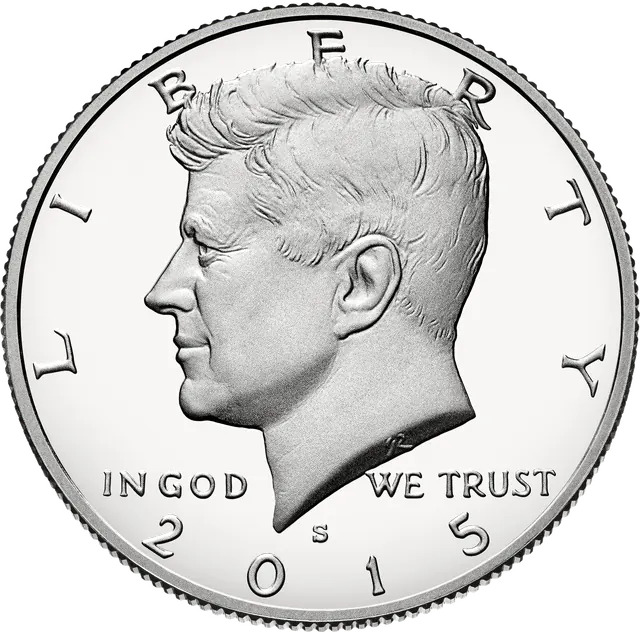
Kennedy half dollar1968 to today
- Where
- Front, between the bust and the date
- Letters
- P (from 1980), D, S
S halves are proofs. 1965 to 1967 halves have no mark.
Kennedy half values
Dollars
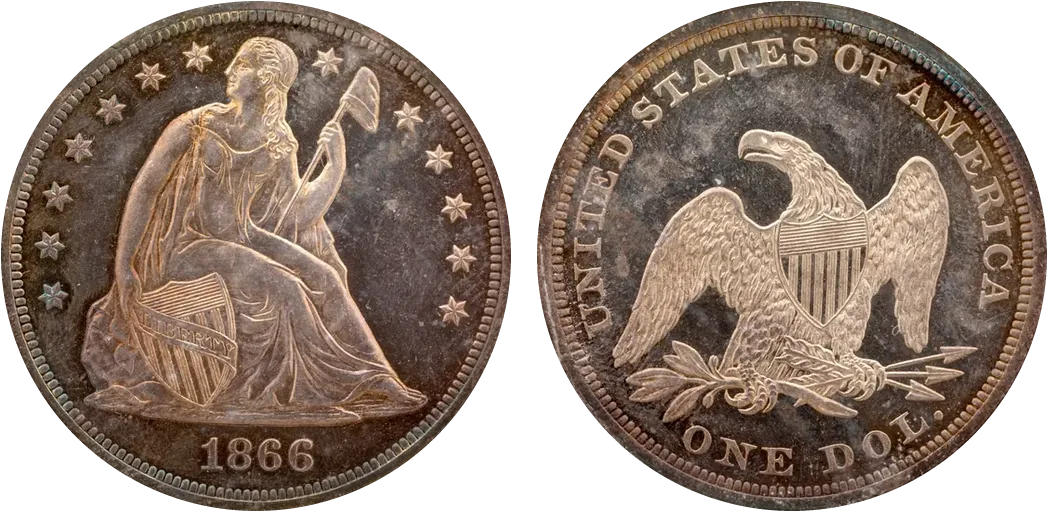
Seated Liberty dollar1840 to 1873
- Where
- Back, under the eagle
- Letters
- None, O, S, CC
- Melt
- $33.82 in silver
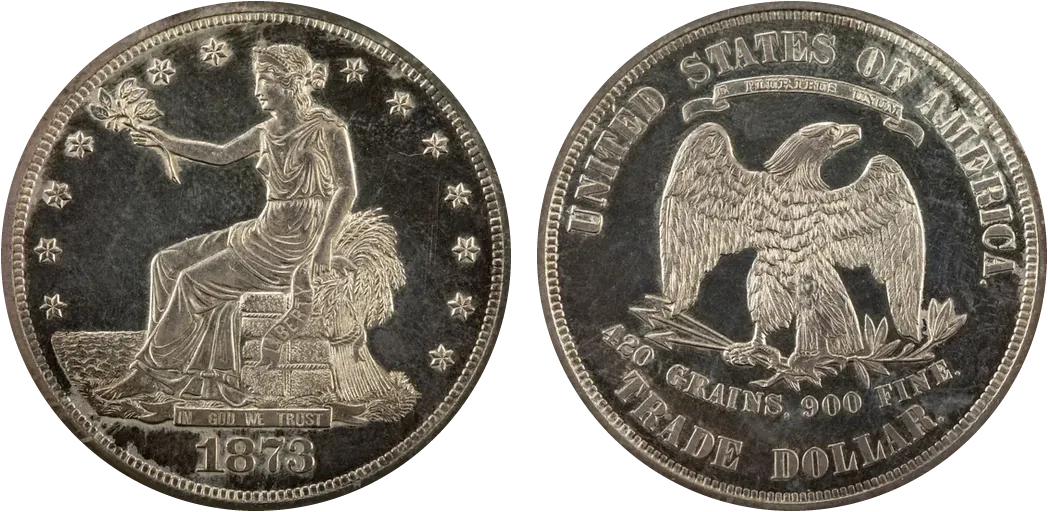
Trade dollar1873 to 1885
- Where
- Back, under 420 GRAINS, above the E and D of TRADE DOLLAR
- Letters
- None, S, CC
- Melt
- $34.43 in silver
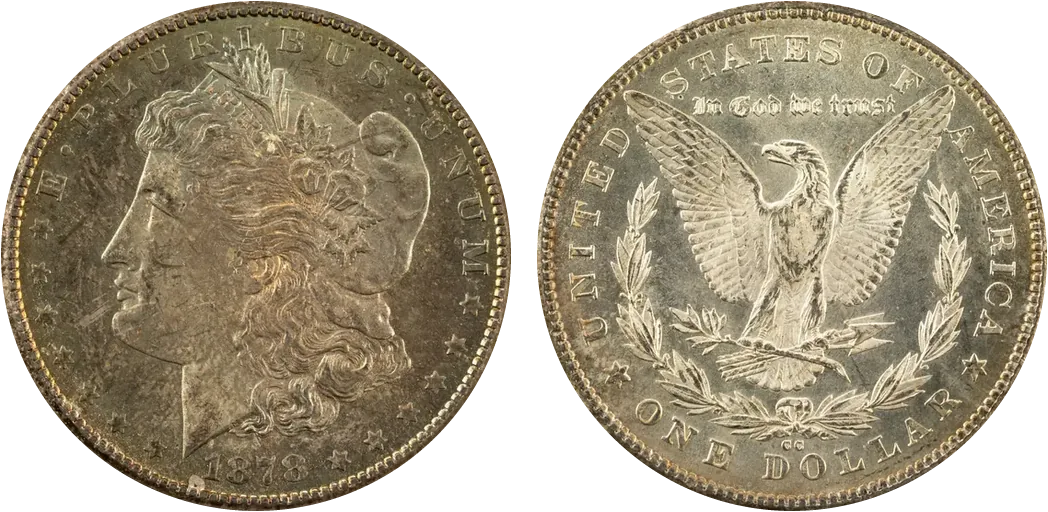
Morgan dollar1878 to 1904, 1921
- Where
- Back, above the D and O in DOLLAR
- Letters
- None, O, S, CC, D
- Melt
- $33.82 in silver
D appears only in 1921.
Morgan dollar values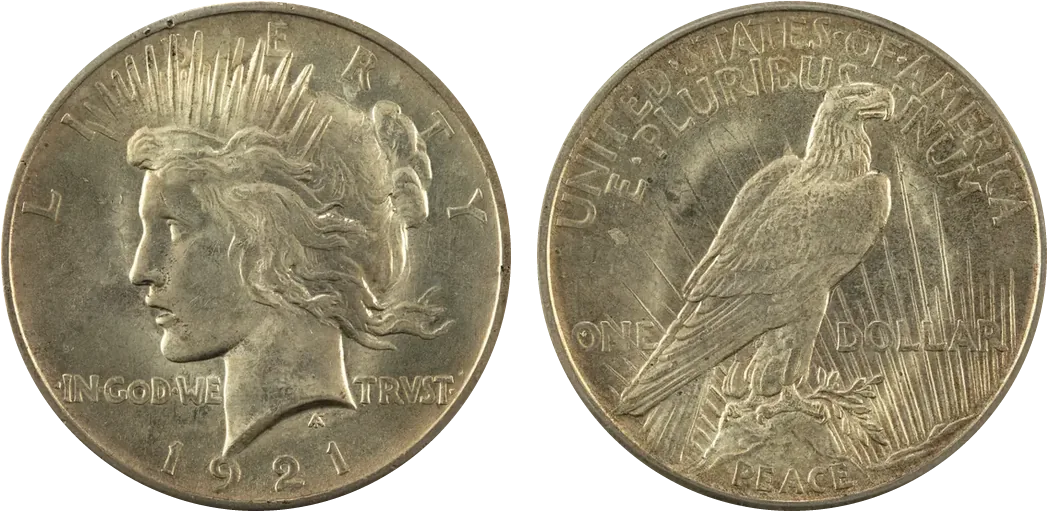
Peace dollar1921 to 1935
- Where
- Back, lower left, under ONE and above the eagle's wing tip
- Letters
- None, D, S
- Melt
- $33.82 in silver
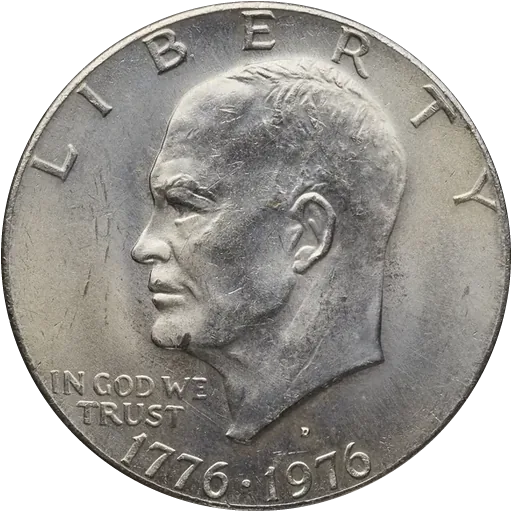
Eisenhower dollar1971 to 1978
- Where
- Front, under the neck, above the date
- Letters
- None, D, S
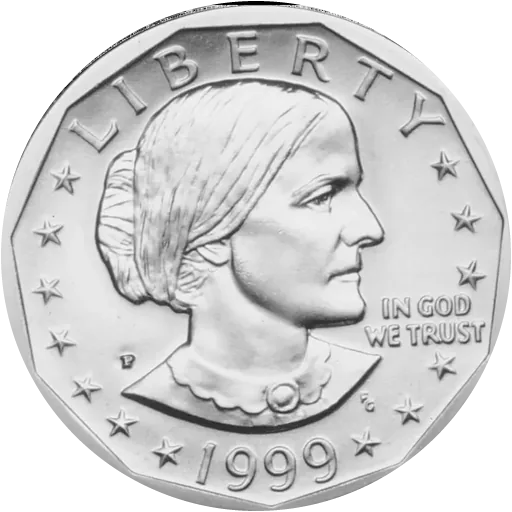
Susan B. Anthony dollar1979 to 1981, 1999
- Where
- Front, just above the shoulder, in the left field
- Letters
- P, D, S
The first coin to carry a P since the war nickels.
Susan B. Anthony dollar values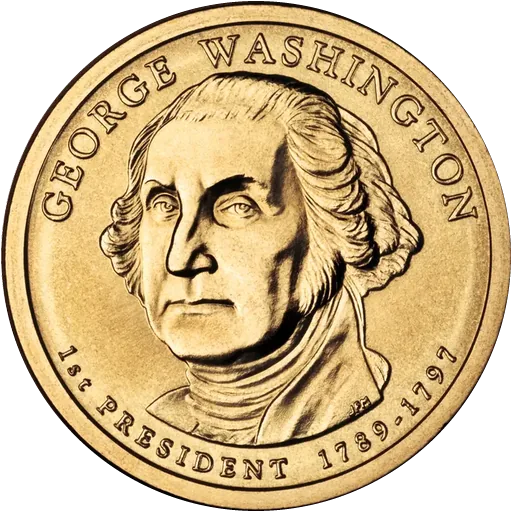
Sacagawea, Native American and Presidential dollars2000 to today
- Where
- Front, with the date (Sacagawea, 2000 to 2008); on the edge since then
- Letters
- P, D, S
Presidential dollars (from 2007) and Native American dollars (from 2009) carry the date and mint mark in the lettering around the edge, so turn the coin on its side.
Presidential dollar values
Gold
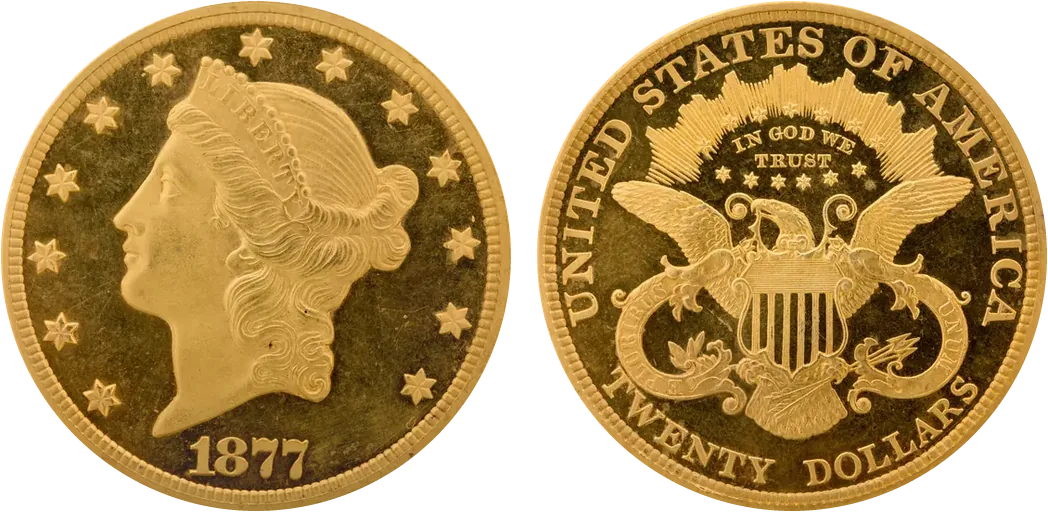
Liberty Head double eagle ($20)1850 to 1907
- Where
- Back, under the eagle
- Letters
- None, O, S, CC, D
- Melt
- $3,534.77 in gold
The Liberty Head $5 and $10 carry it in the same place.
$20 gold coin values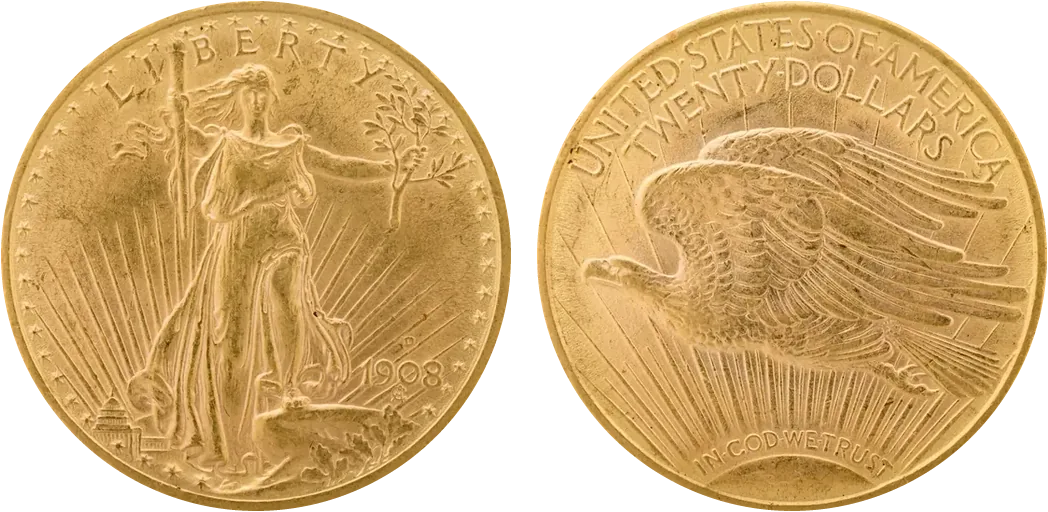
Saint-Gaudens double eagle ($20)1907 to 1933
- Where
- Front, above the date
- Letters
- None, D, S
- Melt
- $3,534.77 in gold
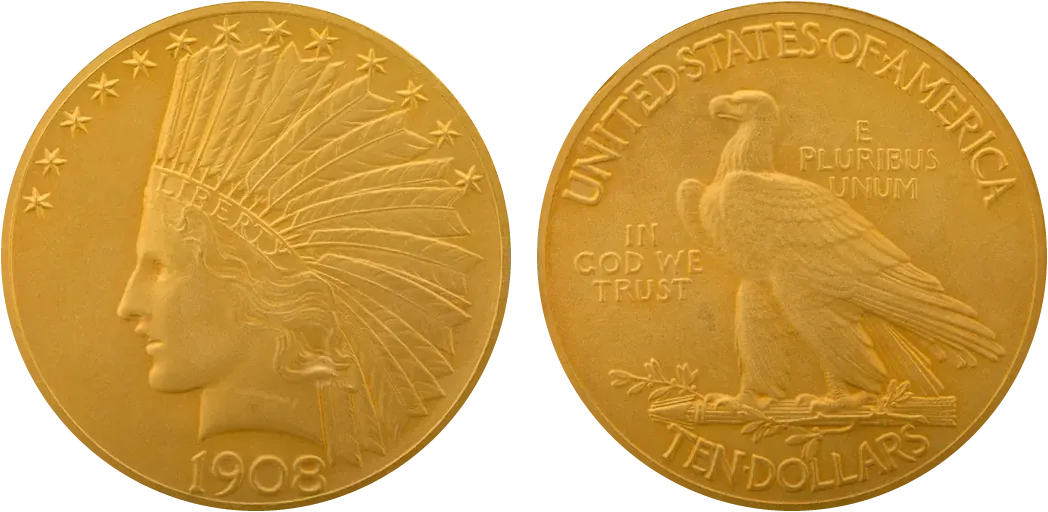
Indian Head eagle ($10)1907 to 1933
- Where
- Back, left of the arrow the eagle stands on
- Letters
- None, D, S
- Melt
- $1,767.39 in gold
On the 1908-D without the motto it sits above the leaves near the eagle's feet.
$10 gold coin values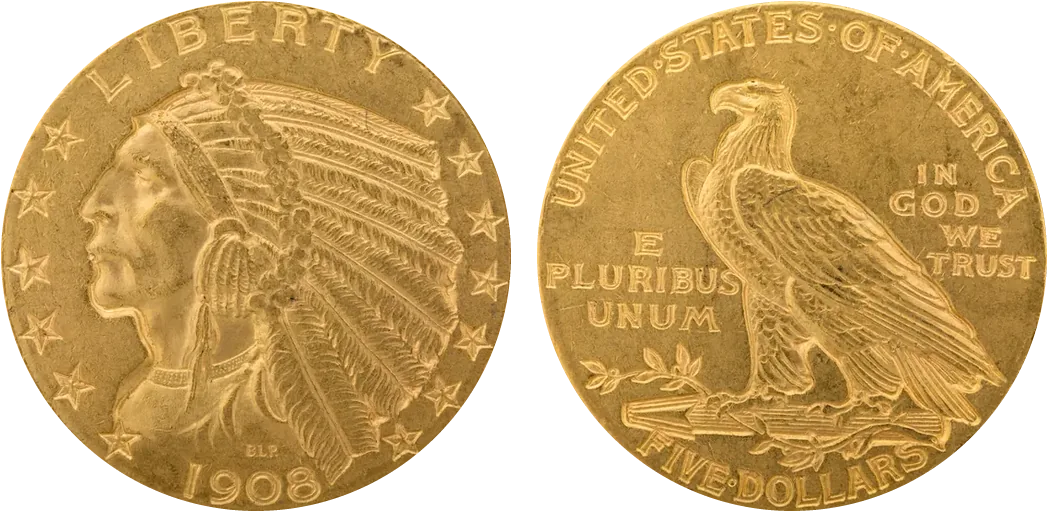
Indian Head half eagle and quarter eagle ($5, $2.50)1908 to 1929
- Where
- Back, left of the arrowheads
- Letters
- $5: none, D, S, O (1909 only). $2.50: none, D
- Melt
- $883.67 in gold
Never carried a mint mark: the half cent, large cent, Flying Eagle cent, two-cent piece, nickel three-cent piece and Shield nickel, plus every Philadelphia coin before 1942. The silver three-cent piece has one marked date, the 1851-O.
Every US mint and its letter
The United States has struck coins at nine mints. Four still work today. The other five closed between 1861 and 1941, which is why their letters show up only on older coins, and why those coins draw so much interest from collectors.
| Mark | Mint | What it struck | Notes |
|---|---|---|---|
| P | Philadelphia, PA1793 to today, open today | Every denomination | The first mint. Its coins had no mark until the wartime nickels of 1942, and again none from 1946 until the 1979 Anthony dollar. Since 1980 its circulating coins carry a P, except the cent, which got one only in 2017. |
| D | Denver, CO1906 to today, open today | Every circulating denomination | Started striking coins in 1906. Today it strikes circulating coins alongside Philadelphia. |
| S | San Francisco, CA1854 to today, open today | Circulating coins to 1955, then mostly proofs | Opened for California Gold Rush gold. Struck circulating coins with an S until 1955, then S nickels (1968 to 1970), cents (1968 to 1974) and dollars (1979 to 1981). Proof sets have come from here since 1968. |
| W | West Point, NY1984 to today, open today | Gold, platinum and silver collector and bullion coins | The W first appeared on the 1984 Olympic $10 gold coin. Its first W on a circulating coin was the 2019 quarter. |
| O | New Orleans, LA1838 to 1861, 1879 to 1909 | Gold and silver | Seized by Louisiana and the Confederacy in 1861. Reopened in 1879 and struck millions of Morgan dollars before closing for good in 1909. |
| CC | Carson City, NV1870 to 1893 | Gold and silver | Built for silver from the Comstock Lode, the largest silver strike in US history. The only two-letter US mint mark. |
| C | Charlotte, NC1838 to 1861 | Gold only | Coined gold from the Carolina mines. Closed by the Civil War. |
| D | Dahlonega, GA1838 to 1861 | Gold only | Coined Georgia gold. Closed by the Civil War. Its D has nothing to do with Denver, which began striking coins 45 years after Dahlonega closed. |
| M | Manila, Philippines1920 to 1922, 1925 to 1941 | Philippine coins only | The only US mint outside the 50 states. It struck centavo and peso coins for the Philippines and added an M from 1925 until the Japanese invasion in 1941. |
Two mints have used D. A D on a coin dated 1838 to 1861 means Dahlonega, Georgia, and those are all gold. A D from 1906 on means Denver. The two never overlapped.
How mint marks changed since 1838
Mint marks started as quality control. When the government made coins from gold and silver, each branch mint's output was checked against the standard, and the letter showed who to hold responsible. The rules about which coins get a letter, and where it goes, have changed many times since.
- Philadelphia strikes the first US coins. With only one mint, no mark is needed.
- Branch mints open in Charlotte (C), Dahlonega (D) and New Orleans (O). Mint marks appear on US coins for the first time.
- The San Francisco Mint opens to coin Gold Rush gold, using an S.
- The Civil War closes Charlotte and Dahlonega for good and shuts New Orleans.
- Carson City starts striking gold and silver with its CC.
- New Orleans reopens and coins for another 30 years.
- Carson City strikes its last coins.
- Denver begins striking coins, bringing back the D letter.
- New Orleans closes, ending the O.
- The Manila Mint starts adding an M to Philippine coins.
- Wartime nickels switch to a silver alloy and get a large mint mark above Monticello. Philadelphia's P appears on a coin for the first time.
- The prewar nickel alloy returns, the small mark goes back beside Monticello and Philadelphia drops the P.
- No mint marks at all. The Mint left them off to discourage collectors from hoarding coins during the switch from silver to clad coins.
- Mint marks return and move from the back of coins to the front. Proof coins move to San Francisco and get the S.
- The Susan B. Anthony dollar carries a P, the first since the war nickels.
- Philadelphia adds the P to every coin except the cent.
- West Point's W appears on the Olympic $10 gold coin.
- A W dime goes into that year's mint sets.
- Presidential dollars (2007) and Native American dollars (2009) carry their mint mark on the edge.
- A P appears on the cent for the first time, for the Mint's 225th anniversary, and only for that year.
- West Point releases 10 million W quarters, the first W on a circulating coin.
Coins with no mint mark
A coin with no letter almost always came from Philadelphia. The first US mint left its coins unmarked for most of its history, and it still leaves the P off cents, apart from the 2017 issue. So a 1950 dime with no letter, or a 2024 cent with no letter, is a Philadelphia coin.
There are three other reasons a coin can lack a mark. First, coins dated 1965, 1966 and 1967 have none from any mint, because the Mint dropped marks to discourage hoarding during the switch to clad coins. Second, San Francisco and West Point struck circulating cents, dimes and quarters in the 1970s and 1980s without their letters, so those coins look exactly like Philadelphia ones. Third, mistakes: grease filled the D on some 1922 Denver dies, making the "no D" cent, and a few proof coins left San Francisco without their S.
Those mistakes are the only no-mark coins worth real money. A worn coin where the mark simply wore away is not one of them, so check the spot with a magnifier before you get excited.
Mint marks worth looking for
No letter is worth money on its own. What matters is the date and mint together: a mint that struck only a few hundred thousand of a coin in a given year made a rarity. These are the combinations most worth checking for.
| Coin | Why it matters |
|---|---|
| 1909-S VDB Lincoln cent | Only 484,000 released, the rarest Lincoln cent by date and mint mark. Look for the S under the date and VDB at the bottom of the back. |
| 1914-D Lincoln cent | 1,193,000 struck. Worn examples still sell for well over $100. |
| 1922 "no D" Lincoln cent | Struck at Denver with the mark filled in on the die. Only coins with a strong second 2 and a sharp reverse bring the big money. |
| 1916-D Mercury dime | 264,000 struck, the key date of the series. |
| 1894-S Barber dime | 24 struck as proofs, one of the great US rarities. |
| 1932-D and 1932-S Washington quarters | 436,800 and 408,000 struck, the two lowest mintages of the series. |
| 1893-S and 1889-CC Morgan dollars | The 1893-S has the lowest mintage of any circulation Morgan at 100,000. The 1889-CC, at 350,000, is the scarcest Carson City date. |
| Any CC coin | Carson City struck far fewer coins than the big mints in its 23 years, so CC coins sell above common dates of the same type. |
| 1996-W Roosevelt dime | Made only for that year's mint sets, never released for circulation. |
| 2019-W and 2020-W quarters | Two million of each design went into circulation mixed with regular quarters, 10 million a year. The 2020-W coins also carry a V75 privy mark for the end of World War II. Worth checking your change. |
For what a specific coin sells for by grade, follow the link to its value page. For silver and gold coins, the metal sets a floor: see the silver coin melt values and gold coin melt values.
Mint mark varieties
- Repunched mint marks
- Until the 1990s, workers punched mint marks into each die by hand, so a letter sometimes got struck twice a little off. The 1938-D over S Buffalo nickel, found in 1962, was the first repunched mint mark discovered on a US coin.
- Over mint marks
- A die made for one mint and re-marked for another. The 1942 Walking Liberty half with a D over an S, and 1955 nickels where Denver re-marked unused San Francisco dies, are well-known examples.
- Small and large letters
- The 1945-S "micro S" dime used a tiny punch made for Philippine coins. The 1892-O "micro O" half dollar used a punch meant for the quarter and is the rarest Barber half.
- Missing marks
- A mark can vanish when grease fills the die, as on the 1922 Denver cents, or when the Mint leaves it off by mistake, as on a few proof coins struck at San Francisco without the S.
How to read a faint mint mark
Use a 5x or 10x magnifier and tilt the coin under a single bright light, so the letter casts a small shadow. A raking light from the side shows a worn mark far better than light from straight above. On very worn Buffalo nickels and Standing Liberty quarters, the mark may be gone along with the date.
Don’t mistake a designer’s initials for a mint mark. The JS under Roosevelt’s neck stands for John Sinnock, the M on the Standing Liberty quarter for Hermon MacNeil, the VDB on 1909 cents for Victor David Brenner, and the FG on the back of Kennedy halves and Memorial cents for Frank Gasparro. A mint mark is always a single letter, or CC, set apart from the design.
Check the right side of the coin. Before 1968 most marks were on the back, and since then they have been on the front. The finder above shows the exact spot for each type.
Common questions
Frequently Asked Questions
Want the full story of US coins, from the 1792 Coinage Act to the end of the penny? See the history of US coinage.
Sources
- US Mint: Mint marks: mint mark history, the 1942 P, 1965 to 1967 pause, 1968 move, 1979 and 1980 P, 2017 P cent, 2019 W quarters and the active and historic mints with their years
- Wikipedia: Mint mark: the nine official US mints
- Wikipedia: Manila Mint: Manila's years of operation and the M mark from 1925
- Wikipedia: Lincoln cent: the 1909-S VDB mintage, the 1922 plain cent and the 1965 to 1967 pause
- Wikipedia: Jefferson nickel: wartime mint marks, the 1955 D over S dies, the 1968 move to the front and the 2005 and 2006 positions
- Wikipedia: Buffalo nickel: the 1938-D over S, the first repunched mint mark found on a US coin
- Wikipedia: Mercury dime: the mark's location, the 1916-D mintage and the 1945-S micro S
- Wikipedia: Roosevelt dime: the 1968 return, S proofs and unmarked West Point dimes
- Wikipedia: Barber coinage: mark locations on Barber coins, the 1894-S dime and the 1892-O micro O
- Wikipedia: Standing Liberty quarter: the mark at the base of the wall
- Wikipedia: Walking Liberty half dollar: the February 1917 move from front to back and the 1942 D over S
- Wikipedia: Morgan dollar: the mark above the D and O of DOLLAR and the 1893-S
- Wikipedia: Susan B. Anthony dollar: the 1979 P and the 1980 extension to other coins
- Wikipedia: Saint-Gaudens double eagle: the mark above the date
- Wikipedia: Indian Head eagle: the two mark positions on the $10
- Wikipedia: Indian Head gold pieces: the mark left of the arrowheads on the $2.50 and $5
- Wikipedia: Peace dollar: the mark above the eagle's wing tip
- Wikipedia: Franklin half dollar: the mark above the bell's yoke
- Wikipedia: Eisenhower dollar: the mark under the bust
- Wikipedia: Kennedy half dollar: the 1964 reverse placement and the 1965 to 1967 pause
- Wikipedia: Seated Liberty dollar: the mark beneath the eagle
- US Mint: Native American $1 coins: edge lettering with the date and mint mark
- Wikipedia: America the Beautiful quarters: the 10 million 2019-W quarters and the 1996-W dime
Coin photographs: National Numismatic Collection, National Museum of American History; U.S. Mint; Bibliothèque nationale de France. All public domain. Rings mark where the mint mark sits on each type; not every coin shown carries a letter.
US coins have carried nine mint mark letters from nine mints since 1838. Only four are in use today: P for Philadelphia, D for Denver, S for San Francisco and W for West Point. Coins dated 1965 to 1967 carry no mint mark at all. Source: MeltValue.