
How to Clean Old Coins (and When Not To)
Soak a common old coin in lukewarm distilled water with a drop of mild dish soap, rinse it in distilled water, and let it air dry. Never rub, polish or use acids. If the coin could be rare, don't clean it at all. Cleaning leaves marks that graders spot right away, and it can cut a coin's collector value in half.
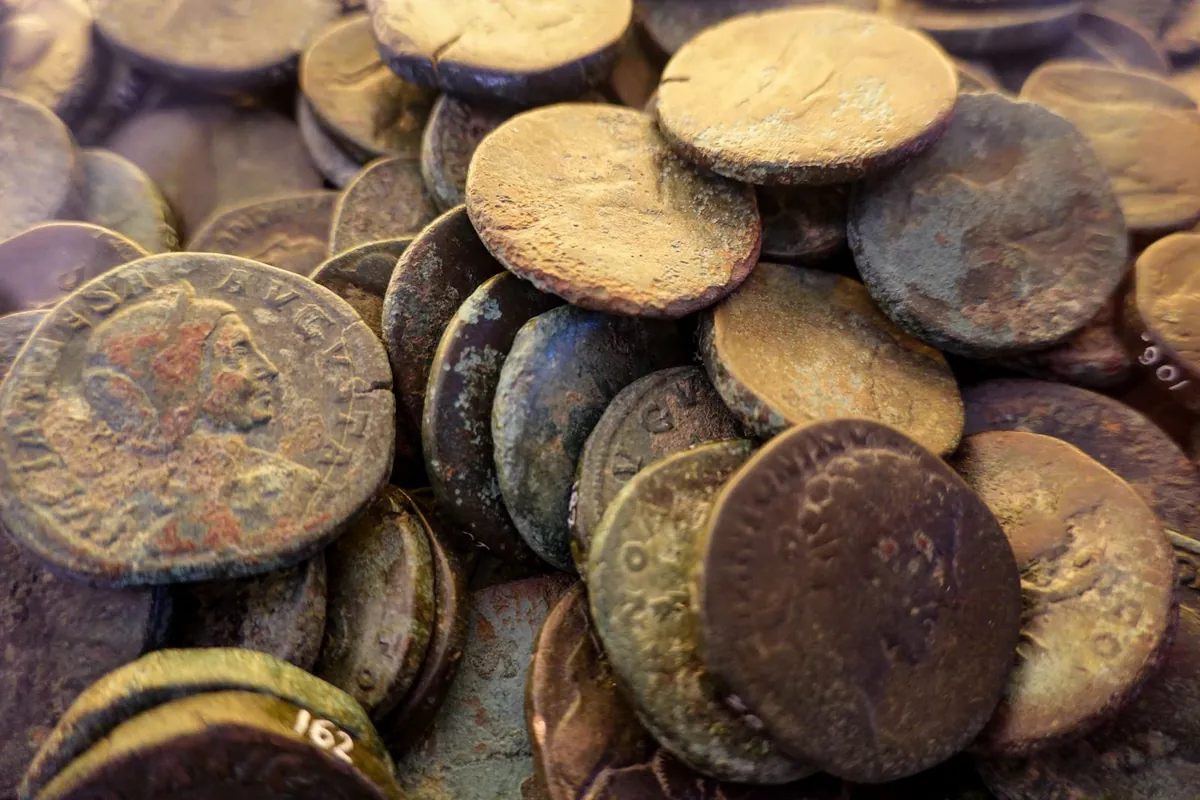
To a collector, an old coin's original surface is worth more than any shine. The brown on old copper and the gray or rainbow toning on silver tell a buyer the surface has never been touched, and that is what they pay for. The coins worth cleaning are the ones you have already checked and know are common: pocket change you want to read, a bag of worn foreign coins, a crusty find from a metal detector. Below you will find how to tell them apart, the washing method conservators use, and what each popular home remedy does to a coin.
01
Should you clean your old coins?
Answer four questions about your coin. The checker tells you whether to clean it, and how.
Should I clean this coin?
Answer all four and you will get a straight answer.
The short rule: clean only what you are sure is common, and only with methods that never touch the metal. Never clean an uncirculated or proof coin. There is no safe home method for them, and even plain water can leave spots on a mirror field. If you can't tell whether a coin is rare, check its date and mint mark on our coins worth more than face value list or the coin grading scale first. A coin you leave dirty can always be cleaned later. A coin you scrub stays scrubbed.
02
What cleaning does to a coin's value
A freshly struck coin has a surface of microscopic flow lines from the strike. Those lines scatter light and give a coin its luster, the soft cartwheel glow that rolls across an uncirculated coin as you tilt it. Rubbing, even with a cloth, wipes those lines out for good.
Hairlines
Abrasives like baking soda, toothpaste and polishing cloths leave patches of fine parallel scratches. They are easy to miss straight on and obvious under a light at an angle.
Stripped color
Acids and dips remove toning down to bare metal. Old copper turns pink and lusterless. A worn silver coin turns a washed-out white that looks wrong next to its wear.
A "Details" grade
When the cleaning shows, PCGS and NGC won't give the coin a number grade from 1 to 70. It gets a Details grade with the problem printed on the label.
NGC's label descriptions run from "Cleaned" and "Wiped" through "Brushed," "Polished," "Burnished" and "Whizzed," the last one a rotary wire brush job meant to fake luster. Older holders say "Improperly Cleaned," a wording NGC replaced with "Cleaned" in 2018. PCGS treats any abrasive cleaning as damage, from a coin polished bright to one with faint hairlines you can only see at one angle. Not every touched coin gets the label. NGC says light, non-destructive cleaning on older coins may still grade, and PCGS doesn't count a proper dip as cleaning. Harsh cleaning is what gets flagged, and it can't be undone.
The Edmonton Numismatic Society puts the loss from harsh cleaning at up to 50 percent of a coin's collector value, sometimes more. It tells the story of a collector who scrubbed thousands of silver dollars with an abrasive. When he was done, each coin was worth only its silver. That is the floor in the box at the top of this page: Morgan dollar melt value today is $33.83, and a scrubbed common-date Morgan sells for not much more. For the gap between metal value and collector value, see numismatic value vs melt value.
The U.S. Mint gives the same advice: don't polish or clean your coins, because natural aging is more desirable than a shine. If you must remove dirt, use mild soap and water and pat the coin dry.
03
Dirt, toning or corrosion? Know what you are looking at
Most "dirty" old coins are not dirty. Before you reach for anything, match what you see to this table.
| What you see | What it is | What to do |
|---|---|---|
| Brown, chocolate or near-black on copper | Patina, the normal stable surface of old copper | Leave it |
| Gray, gold, blue or rainbow color on silver | Toning, a thin silver sulfide layer that builds over years | Leave it. Attractive toning can add value |
| Loose soil, lint, grease, fingerprints | Dirt sitting on top of the coin | Soap and distilled water |
| Sticky or slimy green film, milky haze | PVC residue from soft plastic flips | Soak in 100% acetone |
| Hard green, brown or white crust on a dug coin | Corrosion and mineral deposits from soil | Soften slowly with water or olive oil |
| Light green powder in spots that keeps coming back | Active corrosion ("bronze disease") | Keep it dry, isolate it, see a conservator |
The last row is the one to worry about. The Canadian Conservation Institute describes bronze disease as a light green powder erupting in spots on copper alloys. It feeds on chlorides in the metal, shows up when humidity sits at 55 percent or higher, and can do serious damage fast. Smooth, hard green or brown on an old bronze is the opposite: a stable patina that protects the coin.
04
The safe way to clean an old coin, step by step
This is the washing method from the Canadian Conservation Institute's guide to the care of coins and medals. It removes dirt, oil and salts without touching the metal, so it is safe on silver, copper, nickel and gold.
What you need
- Distilled water (a gallon from the grocery store)
- Mild liquid dish soap
- 100% acetone from a hardware store
- Two small glass or ceramic dishes
- Paper towels and cotton or nitrile gloves
What to skip
- Tap water, which contains chlorine
- Powdered dishwasher detergent
- Nail polish remover, which contains oils, fragrance and other additives
- Brushes, cloths and cotton swabs on the coin face
- Plastic dishes, which acetone can melt
Hold the coin by its edges
Wear cotton or nitrile gloves if you have them, and work over a soft towel in case you drop it. Skin oils leave fingerprints that can etch into the surface over time. Skip latex gloves on silver, because the sulfur in latex tarnishes it.
Soak it in soapy distilled water
Lukewarm distilled water and a few drops of mild dish soap. Let the coin sit for a few minutes, or overnight for grimy ones. Swish the dish gently. Don't scrub.
Rinse in clean distilled water
Move the coin to a second dish of plain distilled water to carry away the soap.
Dip it in acetone
A short soak in pure acetone pulls off the last oils and displaces the water so the coin dries without spots. Finish in a second dish of fresh acetone, since a used bath can leave a film. Acetone is flammable, so open a window and keep it away from flames. Skip it on colorized, painted or lacquered coins and medals, because it can lift the coating.
Air dry on a paper towel
Lay the coin flat and let it dry, or press a soft towel on it gently. Never rub, even with the softest cloth.
If dirt is still stuck after a long soak, soak it again. Anything beyond soaking, such as picking, brushing or dipping, starts to change the surface and belongs only on coins you have confirmed are common.
05
How to clean silver, copper, nickel and gold coins
The soap-and-water method works on every metal. What changes is how far you can safely go past it.
Silver coins
Leave the toning
Wash off dirt and stop there. Toning on silver is tarnish, and on an old silver coin it is normal and often prized. Don't use silver dips, polish or the aluminum foil and baking soda trick. On a circulated coin they leave a washed-out white that collectors read as cleaned, and even professionals dip only uncirculated coins, briefly. A common worn silver coin sells for its silver either way, so stripping it gains you nothing. Check its value in our silver melt value calculator.
Copper coins and pennies
The riskiest metal
Copper changes color faster than any other coin metal. Graders even sort copper coins by color: red, red-brown or brown. The Edmonton Numismatic Society warns there is no safe way to clean high-grade copper coins at home. For a worn coin, wash it, dry it fully, and leave the brown. Original mint red is an orange glow with luster under it. A pink, lusterless old penny is a cleaned penny. For wheat cents and Indian Head cents, check the wheat penny value chart before you do anything.
Nickel and clad coins
Most forgiving
Nickels and modern clad quarters and dimes handle soap, water and acetone well. Grime on circulated nickels sits in the recesses and often soaks loose over a day or two. A modern clad coin is worth face value cleaned or not, so there is little reason to go further.
Gold coins
Usually needs nothing
Gold barely corrodes, so most gold coins need only a soak in soapy distilled water to lift dirt. Older US gold coins are 90 percent gold, and the copper in the alloy can show as reddish toning or small copper spots. Leave both alone: NGC lists unskilled spot removal as a Details problem. Gold is soft and shows hairlines easily, so never wipe or polish it. See US gold coin melt values.
06
Cleaning dug coins and metal detecting finds
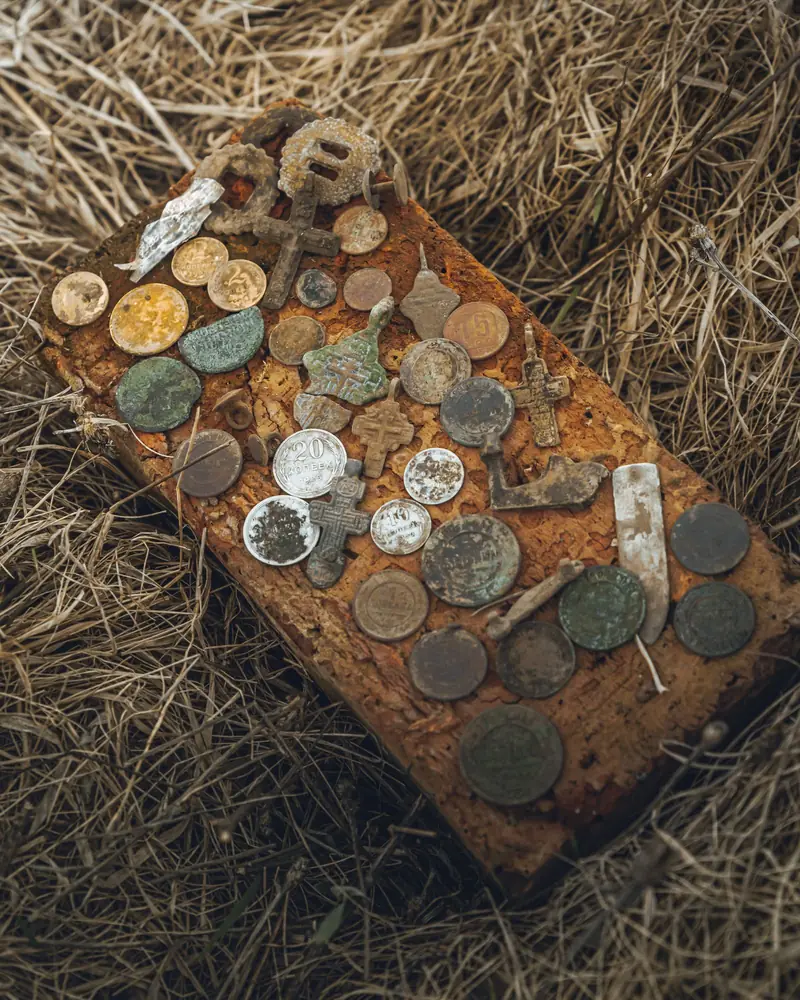
Coins out of the ground are the one case where more cleaning is normal. Soil, minerals and corrosion can hide the date completely. The rule is to soften deposits, never cut through them.
Don't rub it in the field
Soil carries sand that scratches like sandpaper. Rinse with water if you need to see what it is, then bag it and wait until you get home.
Photograph it first
Shoot both sides before cleaning. If the cleaning goes wrong, or you need help with an ID later, you have a record of the original surface.
Soak in distilled water
Change the water every day or two. Soft soil often falls away on its own in a few days.
Move to olive oil for hard crust
Plain olive oil softens encrustation slowly with little risk to the metal. Expect weeks, sometimes months, and don't expect it to work on every crust. Check every few days and wash the oil off with soapy distilled water when you finish.
Pick softened deposits with wood
A wooden toothpick or bamboo skewer is softer than coin metal. Work under a magnifier, a tiny area at a time, and stop the moment you reach the original surface.
Dry it completely
Moisture trapped in a pitted coin can restart corrosion. Let it dry for a day or two before you seal it in a holder.
Skip electrolysis, wire brushes and rotary tools unless the coin is unreadable junk you would otherwise throw away. They strip a coin to bare metal and leave it pitted and pink. If a find looks unusual or old, or might be worth real money, stop cleaning and get it identified. A green patina on an ancient bronze often holds the design, and removing it can take the portrait with it.
07
How to remove green PVC residue from coins
For decades, coins were sold and stored in soft, clear vinyl flips and album pages. The plasticizer in that vinyl leaches out onto the coin, and as the PVC breaks down it gives off acid that reacts with the copper in the alloy. The result is a sticky green film, called green slime, that slowly eats into the surface.
The Canadian Conservation Institute says the plasticizer in PVC flips is especially corrosive to copper alloys, and that silver coins with a high copper content can get it too. NGC won't grade a coin with active residue, because the corrosion keeps going until the residue comes off. Acetone removes it safely.
Use 100% acetone in a glass dish
Hardware store acetone, not nail polish remover. Glass or metal only.
Soak the coin
A few minutes for light haze, several hours for heavy residue. Cover the dish to slow evaporation.
Rinse in fresh acetone and let it dry
A final dip in clean acetone keeps dissolved residue from drying back onto the coin. It evaporates in seconds. If spots remain, soak again.
Throw out the old flips
Soft, oily or "shower curtain" smelling flips contain PVC. Rehouse the coin in a rigid Mylar or polyethylene flip.
Acetone removes the residue. It can't repair metal the residue already etched. The darker the green, the deeper the damage underneath tends to be, which is why it pays to check old flips now rather than later.
08
Vinegar, Coke, baking soda and other home remedies
Most coin cleaning tips online work, in the sense that the coin gets brighter. They get it brighter by removing metal. Here is what each one does.
| Remedy | What it does to the coin | Verdict |
|---|---|---|
| Distilled water | Loosens dirt with no chemical action at all | Safe |
| Mild dish soap | Lifts grease and grime | Safe in distilled water |
| 100% acetone | Dissolves oils, glue and PVC residue, leaves no film | Safe, use ventilation |
| Olive oil | Slowly softens crust on dug coins | Low risk, very slow |
| Vinegar | Acetic acid strips tarnish and etches the metal | Damages coins |
| Lemon juice | Citric acid, same problem as vinegar | Damages coins |
| Coca-Cola | Phosphoric acid brightens copper by dissolving its surface | Damages coins |
| Ketchup or taco sauce | Vinegar plus salt; salt left behind can start new corrosion | Damages coins |
| Hydrogen peroxide | Oxidizer that darkens or blotches copper | Damages coins |
| Baking soda paste | Mild abrasive that leaves hairlines | Damages coins |
| Toothpaste | Abrasive polish that leaves hairlines | Damages coins |
| Pencil eraser | Rubs away luster and leaves hairlines and streaks | Damages coins |
| Aluminum foil, baking soda, hot water | Reverses tarnish on silver chemically, leaves a flat dead white | Strips value |
| Silver dip | Acid bath that removes toning | Pros only, uncirculated coins |
| Metal polish (Brasso and similar) | Abrasive plus chemicals; leaves a glossy, obviously polished coin | Damages coins |
| Ultrasonic cleaner | Vibration shakes loose dirt | Common coins and dug finds only |
| Electrolysis | Strips everything down to bare metal | Unreadable junk only |
The Edmonton Numismatic Society notes that the coin cleaners sold on TV are acid-based and remove surface metal. Even a modern clad coin loses value after one. The Canadian Conservation Institute advises against coin dips and metal cleaners for the same reason: dip acids cause damage when they aren't fully rinsed away, and abrasives scratch.
09
How professionals clean coins
Professional cleaning is called conservation, and it works on what sits on top of a coin rather than on the coin itself.
NGC conservation
NGC's conservation service has treated more than 1 million coins, tokens and medals since 2001. It removes PVC, glue and dip residue, haze and encrustation, and NGC says its methods won't scratch a coin or earn it a cleaning note. Removing residue can expose old hairlines that were hiding underneath, and conservation can't fix harsh cleaning.
PCGS Restoration
PCGS Restoration charges 3 percent of the coin's value after restoration, with a $10 minimum, plus grading. Coins that won't benefit get a $10 evaluation fee and are graded as they are. You need a PCGS membership or a dealer to submit.
Dipping
Dealers sometimes dip uncirculated silver coins briefly to remove light toning or haze. PCGS doesn't count a proper dip as cleaning. Done repeatedly or carelessly, it strips the luster and the coin reads as cleaned.
Is it worth paying for? For a coin worth a few hundred dollars or more with PVC, haze or spots, usually yes, because a numeric grade can be worth far more than the fee. For a common coin worth its metal, no. Wash it at home or leave it be.
10
Drying and storing coins after cleaning
A clean coin goes right back to tarnishing or corroding if you store it badly. A lot of what people try to clean off, like PVC slime and spotting, came from storage in the first place.
Safe holders
Rigid flips made of Mylar (PET), polyethylene or polypropylene, hard polystyrene capsules, acid-free paper envelopes, and cardboard 2x2 holders with Mylar windows (flatten the staples so they can't scratch other coins).
Holders to avoid
Soft vinyl (PVC) flips, old albums with a plastic smell, plain acidic cardboard, and new wooden cabinets or boxes, especially oak, which give off acid vapors.
Keep it dry
Conservators aim for humidity below 30 percent for metals; 35 to 55 percent is the typical range for mixed collections. Put silica gel packs in the box with your coins and avoid basements and attics, where temperature and humidity swing.
Handle it right
Hold coins by the edges over a soft towel. The U.S. Mint also warns against talking over your coins, since tiny drops of saliva leave spots.
Thinking about selling instead? Don't clean anything first. Read how to sell rare coins, and check what the metal alone is worth on our US silver coin melt values page so you know the lowest fair offer before you walk in.
How to clean old coins: common questions
Want to know what your silver coins are worth as metal?
See silver coin melt values →